Honda
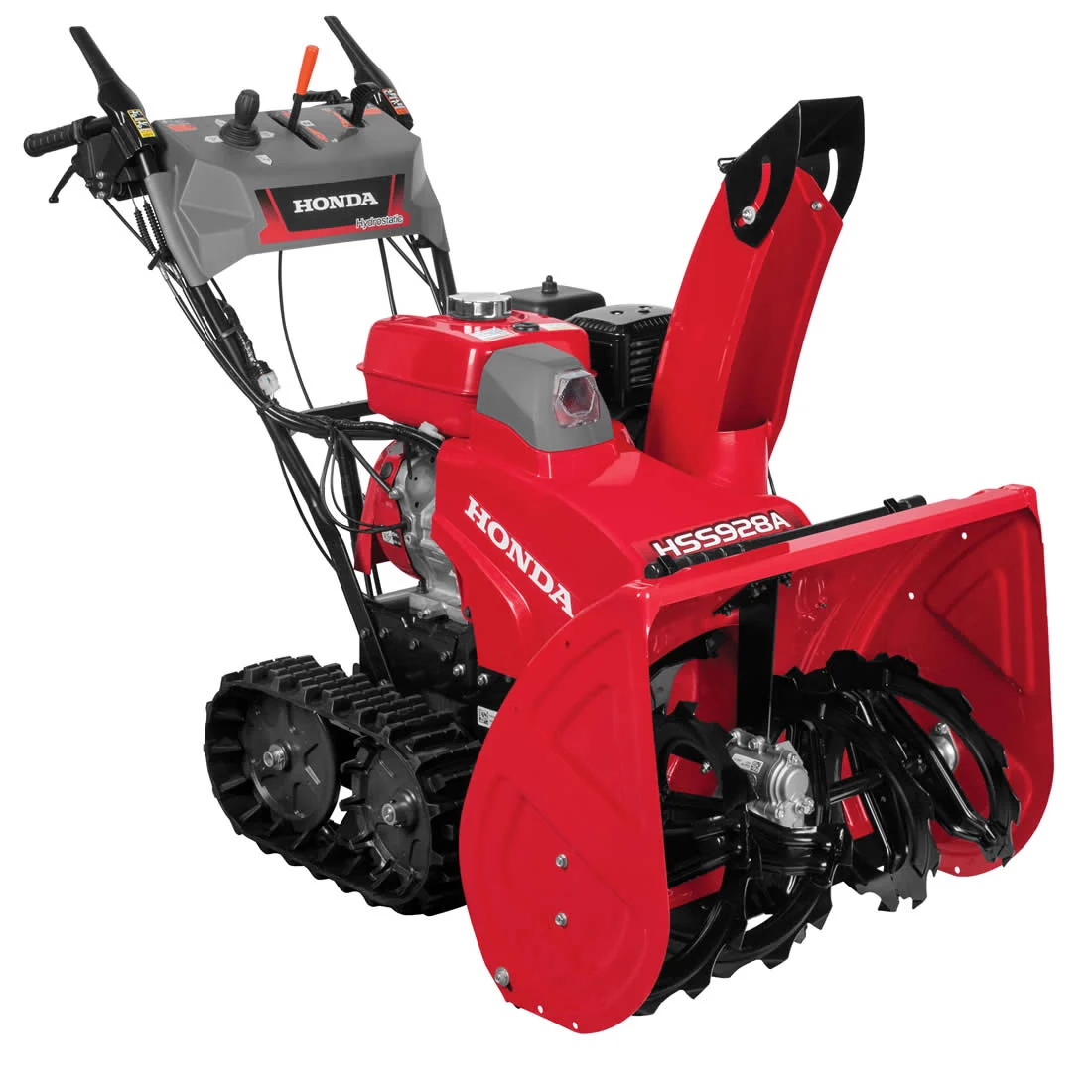
Honda HSS928ATD
The HSS928ATD is the Goldilocks of Honda's track line and the model owner-forum lifers usually mean when they say 'just buy the Honda': a GX270 pushing 1,900 lb/min through a 28-inch bucket, hydrostatic tracks that hold a grade like a tank, and joystick chute control that owners describe as fantastic. Home Depot reviewers call it 'easily the best snowblower made,' and the engine routinely outlives the driveways it clears. Honesty file: this platform was at the center of the HSS wet-snow clogging saga — Honda's redesigned larger-opening chute (free under warranty, standard on current units) mostly settled it, but heavy slush can still slow the 270cc more than the bigger HSS1332. At about $3,599 it costs $1,500 more than an Ariens Platinum 24 SHO and turns slower than Ariens' auto-turn wheels, yet nothing in the price class matches its traction or fit-and-finish.
Two-stage machines add an impeller behind a steel auger and ride on adjustable skid shoes: anything deeper than about eight inches, anything wet and heavy, gravel surfaces, and the compacted wall the city plow leaves at the end of the driveway.
Price and availability on Honda’s site may differ.
Specifications
Hydrostatic track drive you steer with left and right control levers — infinitely variable speed means you match ground speed to snow load perfectly instead of hunting gears. The electric joystick flicks the chute anywhere in seconds, and the auger-height lever raises the bucket for gravel or drops it to scrape.
Highlights
Pros
- ✓Track traction and low center of gravity handle slopes wheeled machines can't
- ✓Infinitely variable hydrostatic speed in forward and reverse
- ✓Electric joystick chute control is the best in the business
- ✓52-foot throw clears wide driveways without re-blowing the same snow
- ✓Onboard battery key start — no cord, reliable in deep cold
Cons
- ✗$3,599 street price is nearly double a comparable wheeled Ariens Deluxe
- ✗Wet-snow chute clogging plagued earlier HSS928 units — insist on the updated chute
- ✗No trigger steering, so tight turns take real effort at 276 lb
- ✗No heated grips at a price where Husqvarna and Ariens include them
- ✗Dealer-only sales and seasonal stockouts make it hard to buy mid-winter
Owner Insightssummarized from owner forums and reviews
The HSS928ATD is the machine long-time owners usually mean when they say 'just buy the Honda' — the mid-size track model with enough engine to avoid the HSS724's power complaints and enough polish to justify the badge. Owner sentiment is the most enthusiastic in the lineup: 'beast,' 'best machine I've owned,' and stories of predecessor Hondas running 20+ years anchor the discussions. The enthusiasm is genuine, but so is the honesty about this platform's history and quirks.
The history is the wet-snow clogging saga: early HSS928 units clogged in slush badly enough that Honda engineered a redesigned chute with a larger opening, offered free under warranty, and owners who got it consistently report the problem solved — but it's the first thing to verify on any used unit. The quirks are pace and steering: transport speed maxes around 2.3 mph (early machines got transmissions swapped under a service bulletin for running even slower), and with no trigger steering, turning takes technique. Some owners also fight carburetor surging in cold, damp weather, curable with winter fuel and heat-shield tweaks. Against that: a joystick chute owners call best-in-class, an auger-height lever that makes gravel drives a non-issue, and key starts that never miss.
It's the buy-once machine for heavy-snowbelt homeowners with sloped or gravel driveways who can stomach the price — roughly double a wheeled Ariens Deluxe of similar width. Flat-paved-driveway owners get a faster clear for far less money elsewhere, and owners say so plainly. But for grades, gravel, and decade-plus horizons, the sentiment is nearly unanimous: nothing else in the class matches its traction and fit-and-finish, and resale value means you get much of the premium back if you ever sell.
What owners like
- +The GX270 pulls 8-12 inch storms at a steady walking pace — 'a beast' is the recurring owner verdict, and it rarely needs the crawl speeds the smaller HSS724 does
- +Electric joystick chute control is repeatedly called the best in the business — full repositioning in seconds without releasing the drive
- +Hydrostatic tracks hold steep grades in both directions; owners on hilly driveways say wheeled machines were never in the running
- +Auger height control with the gas-strut assist floats over gravel or drops to scrape hardpack — a thumb-press adjustment owners love
- +Key starts off the onboard battery on the first twist even after weeks in an unheated shed
- +50-foot throws are real-world, not brochure numbers, per owner reports in dry snow
- +Fit and finish draw constant comment — tight panels, smooth controls, an engine that idles like a sewing machine
- +3-year warranty covers commercial use, and owners commonly describe these machines outliving 15-20 year horizons
Common complaints
- −This platform sat at the center of the HSS wet-snow clogging saga — early units clogged badly in slush until Honda's redesigned larger-opening chute, which owners confirm mostly cured it
- −Ground speed tops out around 2.3 mph — owners with long driveways call transport tediously slow, and some early machines had transmissions replaced under a service bulletin for exactly this
- −No trigger steering: turning 276 lb of tracked machine takes real effort or a learned slow-then-pivot technique
- −Carburetor surging and icing in specific cold, humid conditions is a known annoyance — owners fix it with winter-blend fuel, heat shields, or extra carb gaskets
- −At roughly $3,599 it costs nearly double a comparable wheeled machine, and owners admit the premium is partly badge
- −No heated grips at a price where Husqvarna and Ariens include them — one of the most common feature gripes
- −Moving it with the engine off is a two-person job; the tracks and hydrostatic drive fight you
- −Dealer-only distribution means seasonal stockouts — owners report waiting months or driving hours to buy mid-winter
Common Questions
Does the HSS928 still clog in wet snow?
Is it really that slow?
How hard is it to turn?
What's the fix for engine surging in cold weather?
HSS928 or HSS1332?
Is it worth $3,600 when an Ariens costs $2,000?
Compare the Honda HSS928ATD
Related snow blowers
More from Honda →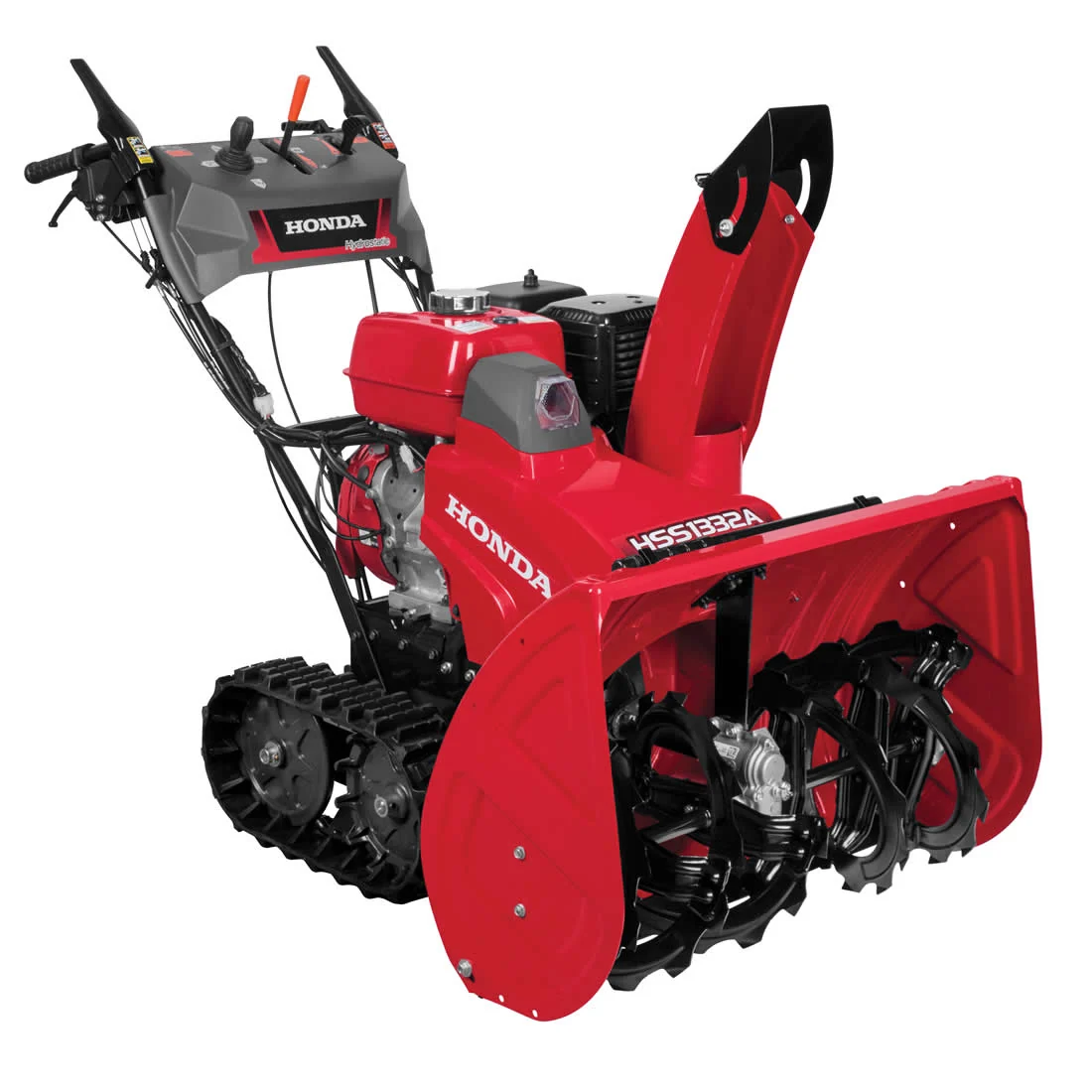
Honda HSS1332ATD
~$3,99931.9" wide · 56 ft throw · 298 lb
This is the biggest gas snow blower Honda sells in the US and the machine owner-forum threads simply call 'awesome': a GX390 moving 2,750 lb/min through a 32-inch bucket with a 56-foot throw that reviewers joke puts snow in the neighbor's yard. Notably, the wet-snow clogging complaints that dogged the HSS928 barely touched this model — the bigger impeller and 389cc of torque keep heavy slush moving, and current units carry Honda's redesigned chute anyway. Owners' actual gripes are practical: it's 298 lb, it fills half a shed, turning the tracks means working the steering levers, and at about $3,999 it's up against the Ariens Platinum 30 SHO and Professional RapidTrak, which cost less and steer easier. But for lake-effect country, long steep gravel drives, or anywhere the plow leaves a four-foot wall, this is the no-drama pick — commercial-grade everything, decade-plus service life, and traction that makes chains-on-wheels rivals look silly.
Best for Lake-effect and mountain-country properties with long, steep, or gravel driveways and routinely deep, heavy snow.
Honda HSS724ATD
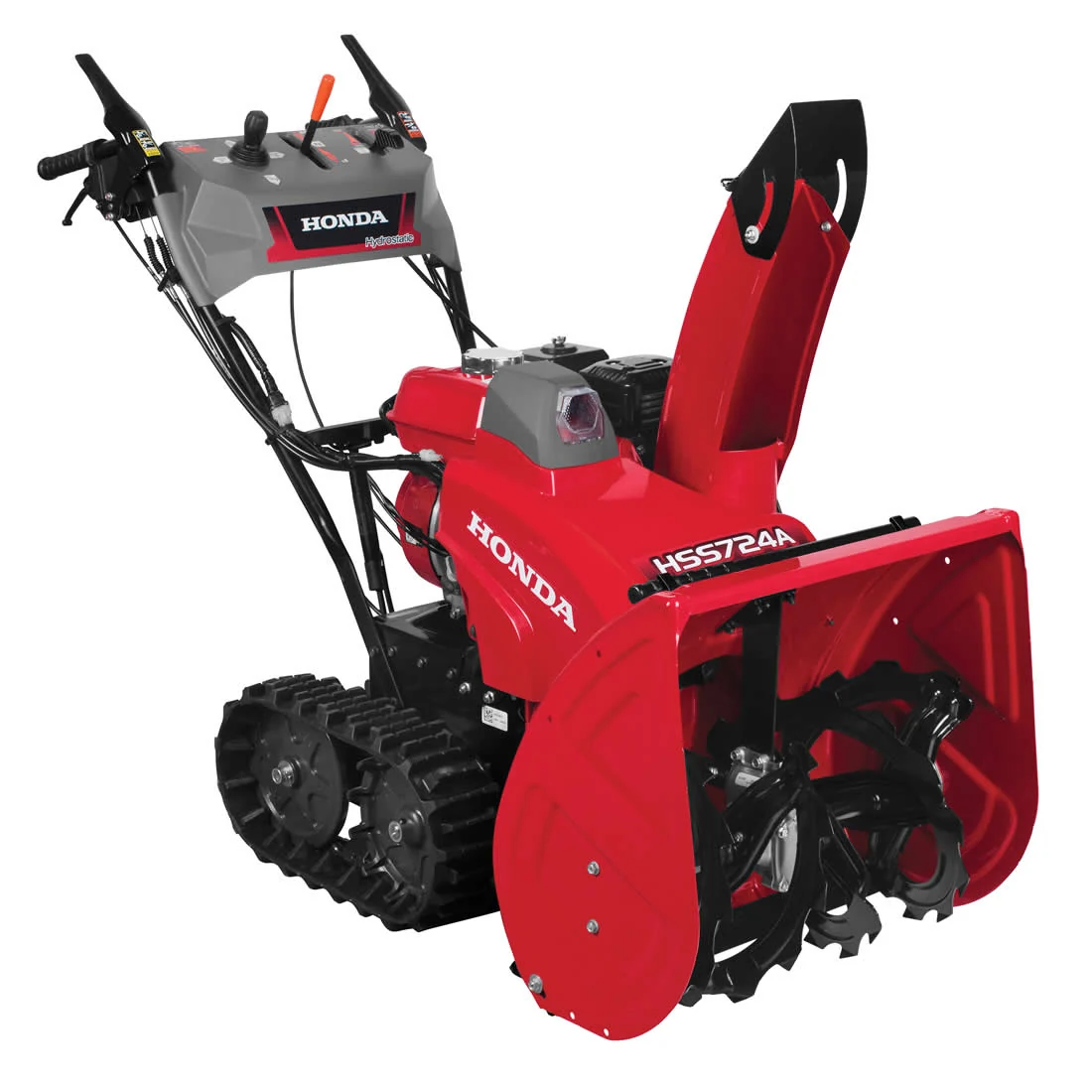
~$3,29923.8" wide · 49 ft throw · 243 lb
This is the smallest of Honda's track-drive HSS line, and the one owners point slope-dwellers to when wheels just spin: hydrostatic tracks claw up steep or gravel driveways, the auger height lever lifts the bucket clear of loose stone, and the GX200 engine is the same commercial mill that runs rental fleets for decades. Owner sentiment is near-reverent about build quality — 'Honda smooth' comes up constantly — but you must know the history: 2015-era HSS machines had a well-documented chute-clogging saga in wet snow, and Honda's fix was a redesigned, larger-opening chute available free under warranty (current production has it baked in). The other rub is price: at roughly $3,299 you're paying Ariens Platinum 24 SHO money plus twelve hundred bucks for a 23.8-inch cut, and Honda has exited single-stage snow blowers entirely in the US, so dealer support is the bet you're making. For deep-snow country on a grade, though, nothing this size works like it.
Best for Steep, icy, or gravel driveways in serious snow country where traction and longevity outrank width-per-dollar.
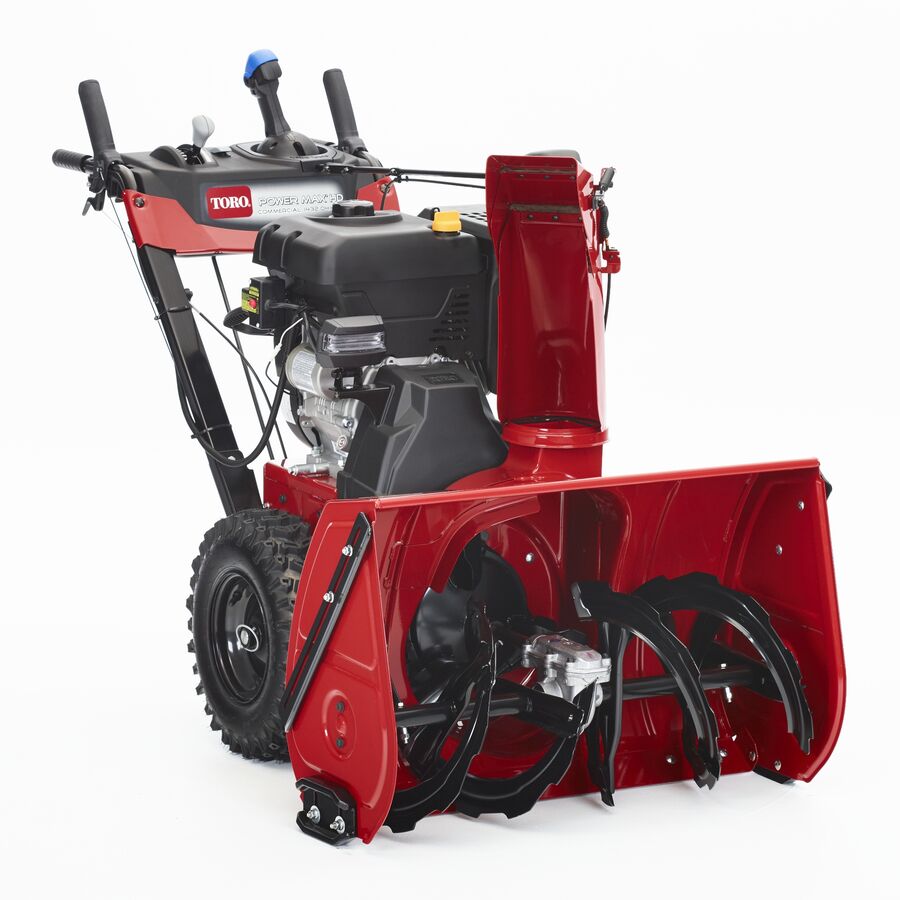
Toro Power Max HD 1428 OHXE
~$3,04928" wide · 65 ft throw · 304 lb · heated grips
This is the top of Toro's walk-behind line and it is built to a commercial spec — the five-year warranty carries a one-year commercial term, which most residential machines will not do at all. The 420cc engine and 21-inch intake put it in the same conversation as the Ariens Professional 28 RapidTrak, and the 65-foot throw is the longest in this catalog by a clear margin. At 304 lb it is also the heaviest wheeled machine here, which is the honest cost of that capability: it is not a machine you turn around casually at the end of a pass. Worth knowing before you buy — Toro lists hand warmers and the LED headlight as standard equipment, not as accessories.
Best for Long or steep driveways in heavy-snow country, and anyone who wants a walk-behind with a warranty that survives light commercial use.
Husqvarna ST 424T
~$3,29924" wide · 40 ft throw · 352 lb · heated grips
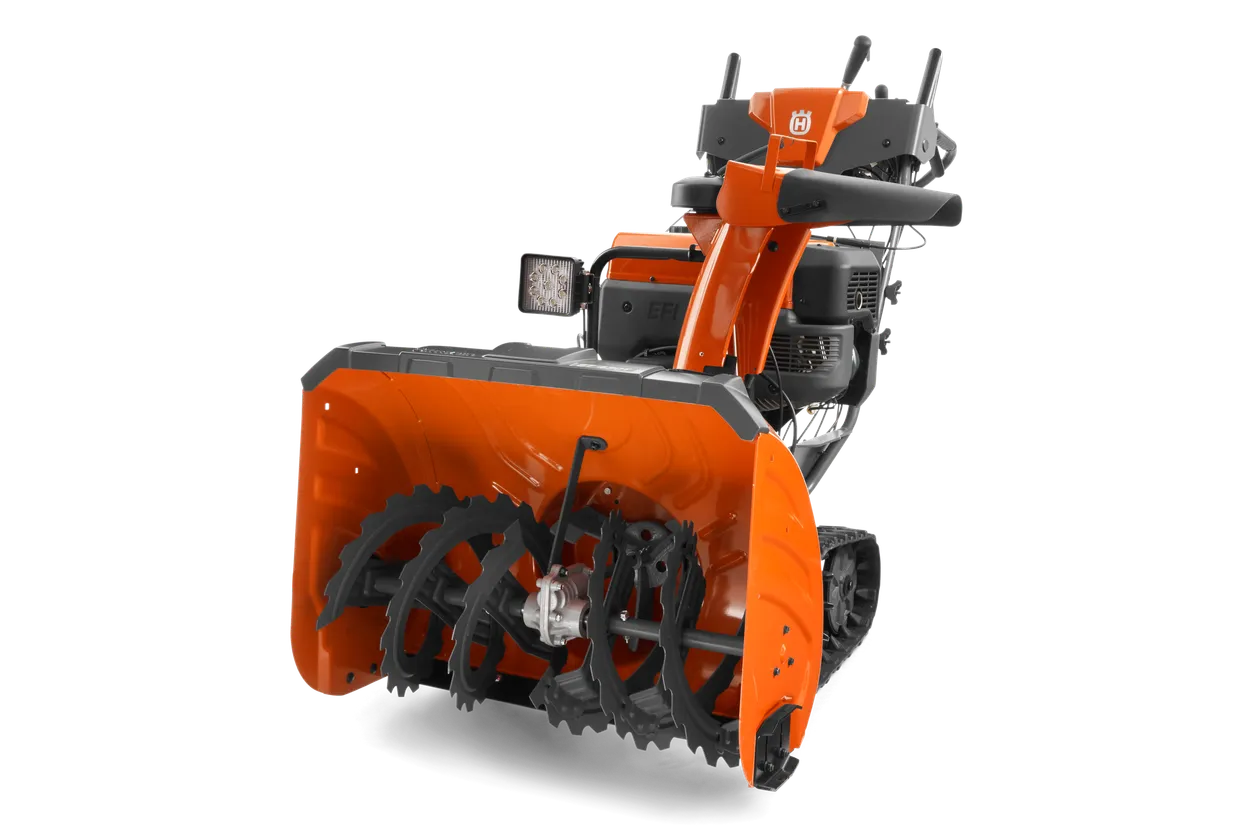
The ST 424T is Husqvarna's current 400-series commercial track machine and its most direct shot at the Honda HSS724ATD — same 24-inch class, same hydrostatic-track formula, the same $3,299 list price, and it counters with things Honda skips: electronic fuel injection for reliable cold starts and altitude compensation, factory heated grips, and an all-steel control console, alongside trigger power steering so the tracks turn without wrestling. The 301cc EFI engine and cast-iron impeller are rated for commercial duty, and reviewers consistently single out how confidently the tracks climb steep, deep-drifted driveways. The honest counterpoints: at 352 lb it's the heaviest machine in its width class by a wide margin, the 400-series is too new to have Honda's decades-deep reliability record or resale value, published owner reviews are still scarce, and it's dealer-channel equipment, so parts support depends on your local pro dealer. If you like the Honda track concept but want EFI and warm hands for the same money, this is the modern pick.
Best for Steep, long, or gravel driveways — and light commercial use — where a Honda track machine is the alternative but EFI and heated grips appeal.
Ariens Platinum 30 SHO
~$2,49930" wide · 55 ft throw · 274 lb · heated grips
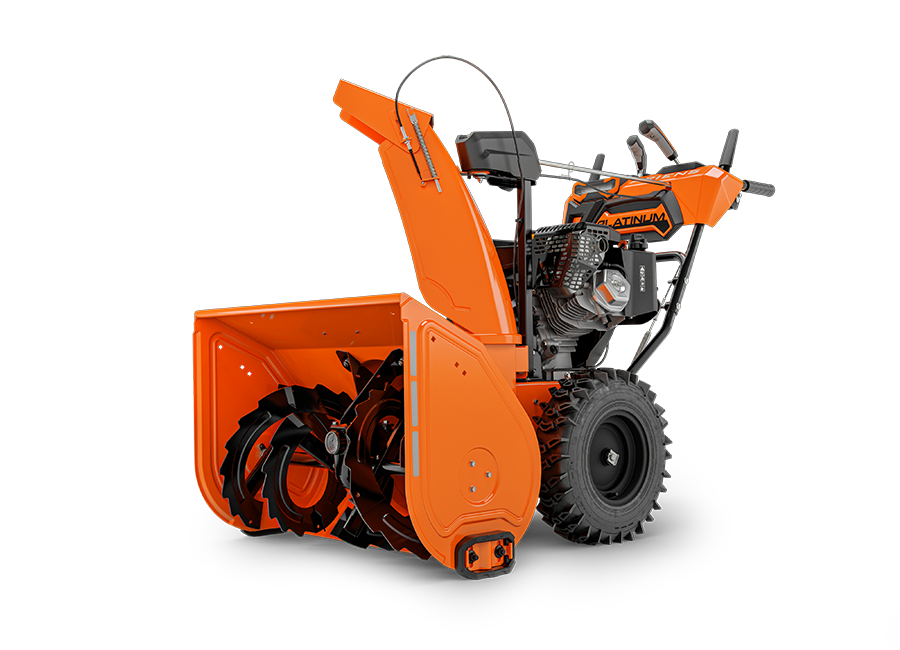
The Platinum 30 SHO is what the Deluxe 30 becomes when Ariens stops economising: a 420cc AX engine instead of the Deluxe's 301cc, the Super High Output impeller, handwarmers and a remote deflector as standard, and an in-dash chute lever rather than a crank. Thirty inches of clearing width and a 21-inch intake put it at the top of the residential range without crossing into the Professional line's price. Against the Toro Power Max HD 1428 OHXE it gives up ten feet of throw and the commercial warranty term, but it is thirty pounds lighter and two inches wider.
Best for Wide or long driveways in serious snow country where a 24-inch machine means too many passes and heated grips are not negotiable.
Cub Cadet 3X 28 IntelliPOWER
~$1,89928" wide · 40 ft throw · 279 lb · heated grips
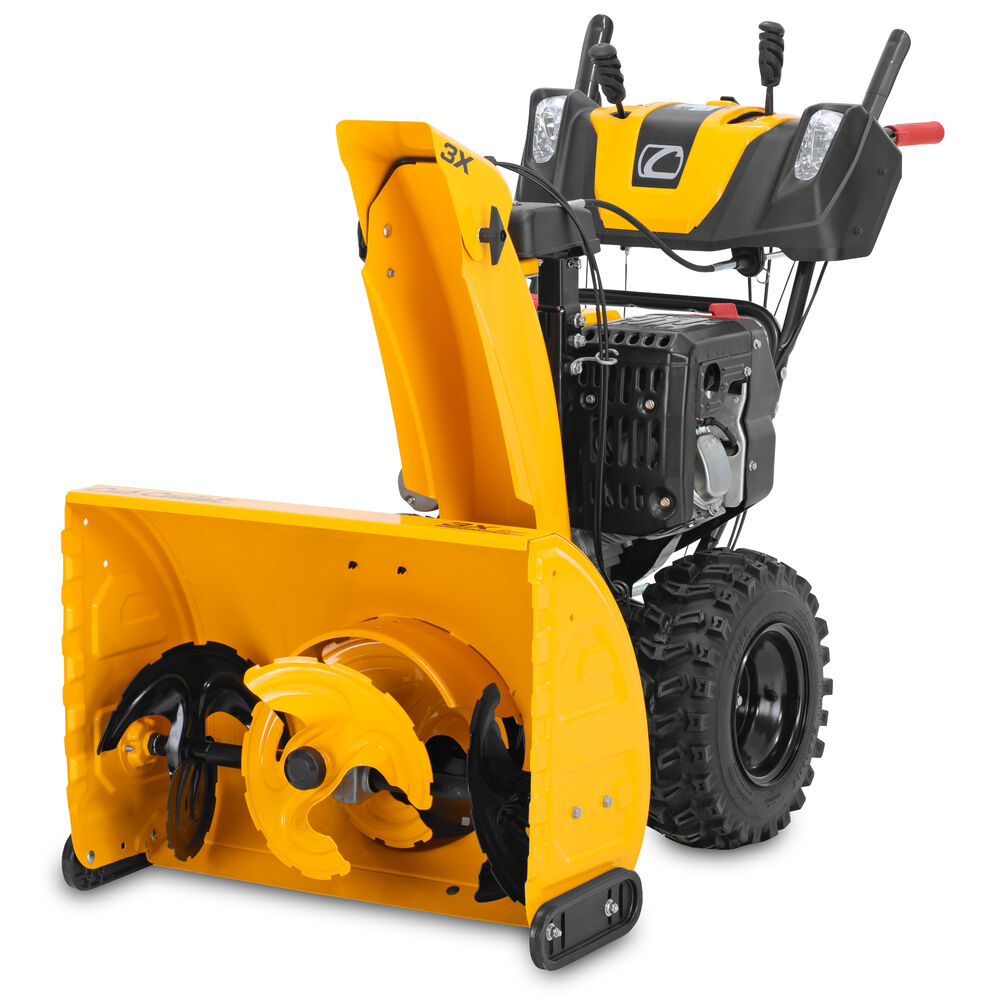
Three-stage machines exist for one job: the compacted ridge a plow leaves at the end of a driveway. The accelerator between the augers and the impeller chews that ridge apart instead of stalling on it; the 21-inch intake is the same height as the 2X 28's, so the third stage is the whole difference. Cub Cadet rates the 3X line to about 23 inches of snowfall against the 2X's 12. The price of all that is 279 lb and a more complex drivetrain with one more wear point than a conventional two-stage.
Best for Driveways that get plowed in, where the real problem is a hardened end-of-drive berm rather than the snowfall itself.